A summary of the news for February.
The project “More languages, more opportunities: A Papiamentu – Dutch language development project” is active in two parts of the city of Rotterdam, IJsselmonde and Hoogvliet. At this moment, the project runs there for one year in 11 families. To make the project more visible and understandable for professionals in Rotterdam that are involved in language learning, the Antillean community and/or multilingualism, an expert meeting was organized on 16 February.
Mrs Wesseling, project manager of Stichting de Meeuw - the organization which executes the project in Rotterdam coordinated by the Fryske Akademy/Mercator - opened the day with some notes about language learning, and especially the difficulties in the Dutch language.
Next, Mr Severina of Stichting Splika (organization promoting Papiamentu language in the Netherlands) introduced the theme of bilingual Papiamentu-Dutch use by telling some anecdotes. He spoke about his experiences of being a child in the Antilles. There, Papiamentu was the home and street language, but was banned from school, where only Dutch was allowed. He also spoke about his experiences as a teacher in the Antilles, where he noticed that a lot of information did not reach the children, because the Dutch language that was used was not meaningful for them. When he first came to the Netherlands, he was introduced in the Dutch society by an Antillean organisation. Because they could explain him how things work in the Netherlands in his mother tongue, Papiamentu, he could make sense of it and felt welcome in the country.
Then Mrs Verheyden-Lels of KLIK-educational support, spoke about language development in general and multilingual development specifically. With interactive techniques she showed how a child experiences language learning and what a parent can do to elicit the natural curiosity of the child to use language. She stressed the fact that parents are very important in the language development of a child. The language input parents give and the involvement parents show in the language development process, are crucial in the language development of a child, especially in the period when a child is between 0 and 6 years old.
Following, project leader and researcher Nienke Boomstra introduced the project “More languages, more opportunities”. A short video illustrated the practices of a language coach during a home visit, and showed how the bilingual materials were used. The design of the project and research were explained. Three central subjects are: 1) the parental beliefs, these are the ideas the mothers have about their role in the language development of the child; 2) the (language) interaction between mother and child; and 3) the language development of the child in Papiamentu and Dutch. Reports will be written to advice professionals working on language development with the target group of Antillean families. Besides, scientific articles will be written for theoretical purposes.
Finally, Mrs Orman, an author, told us a so-called stack-story, mainly in Dutch but with some Papiamentu as well. The story was about a boy named Djan, who experiences some setbacks when he was supposed to watch the land of his neighbour. Mrs Orman told the story very lively, with expressive body language and different voices for different characters. Papiamentu has a long history of storytelling, and is still used a lot in families.
After the official programme there was some time to meet each other and talk about all themes. This gave space for open discussions and information gathering. About 55 professionals attended the expert meeting. It was considered a great success.
Adult education for regional and minority languages was the topic of the 2nd regional conference of the network RML2future in Aabenraa (Denmark) on 7-9 February 2011. The conference was hosted by Højskolen Østersøen, a Højskole where students can learn either Danish or German in interaction with fellow-students that are native speakers of the language. Conference participants were part of the Højskolen Østersøen’s community for three days and experienced the educational approach of the Højskole. Saskia Benedictus-van den Berg of the Mercator Research Centre gave a presentation on adult education in different RML regions in Europe, which showed that there is a great variation in availability of adult education in the different regions and also in the kind of provision. Another presentation was held by Johanna Schröder, of the Agency for European Education Programmes of the German-speaking community Belgium; she explained more about the funding possibilities within the EU’s Grundtvig Programme for adult education. After that, Lisbet Mikkelsen Buhl of the Danske Skoleforeningen and Anke Tästensen of the Deutscher Schul- und Sprachverein, presented the institut für Minderheitenpädagogik (institute for Minority Pedagogy).The 3rd RML2future conference will be held on 26-28 September 2011 in Carinthia/Austria, on the topic of early multilingualism.
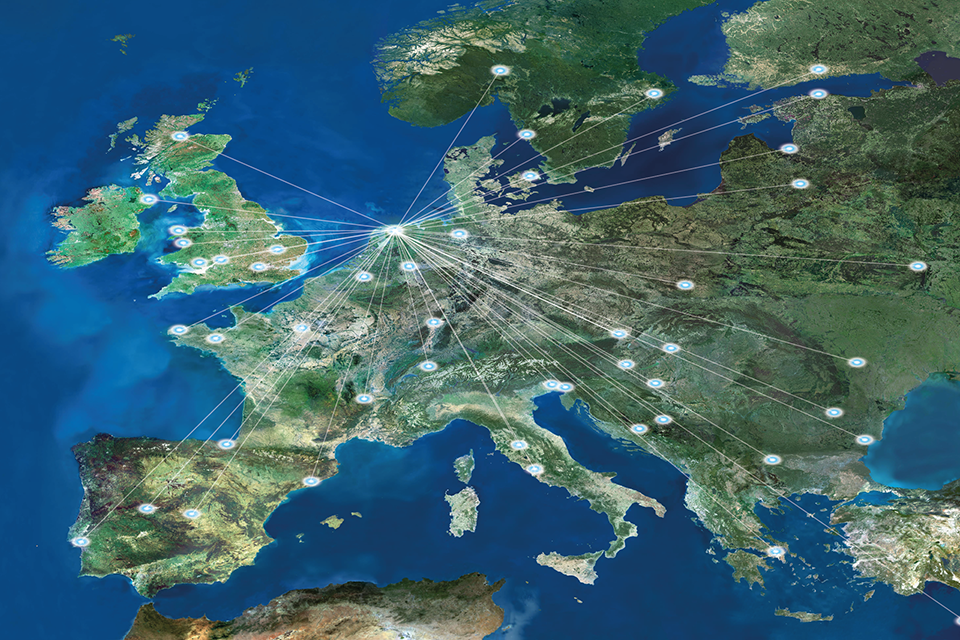
On the 23rd and 24th of March the third Expert Seminar of the Mercator Network of Language Diversity Centres will be organized in Budapest. The seminar is hosted by the Hungarian partner in the Mercator Network: the Research Institute for Linguistics of the Hungarian Academy of Sciences in Budapest.
The Expert Seminar will be followed by an international conference on the 25th and 26th of March with the subject ‘Multilingualism in Europe: prospects and practices in East-Central Europe’.
The Expert Seminar will prepare for the third international conference which will focus on developments of the setting of minimum standards for Regional and Minority Languages in education and the essential legal provisions and requirements for their implementation. This international conference will take place on the 31st of September and the first of October 2011 in Barcelona, Spain.
For the Expert Seminar several important experts already confirmed their presence. Among them are Jeroen Darquennes, György Andrássy, Gabor Kordos, Bernat Joan, Antoni Milian, Pia Lane, Mitja Žagar, Robert Dunbar, Guus Extra and Sangeeta Bagga-Gupta.
For the draft program of the Expert Seminar, please click here.
Click here for the conference programme.